


































5. SP5 Interface Overview and Functional Description

1.Tweeter
2.Woofer
3.Remote receiver window
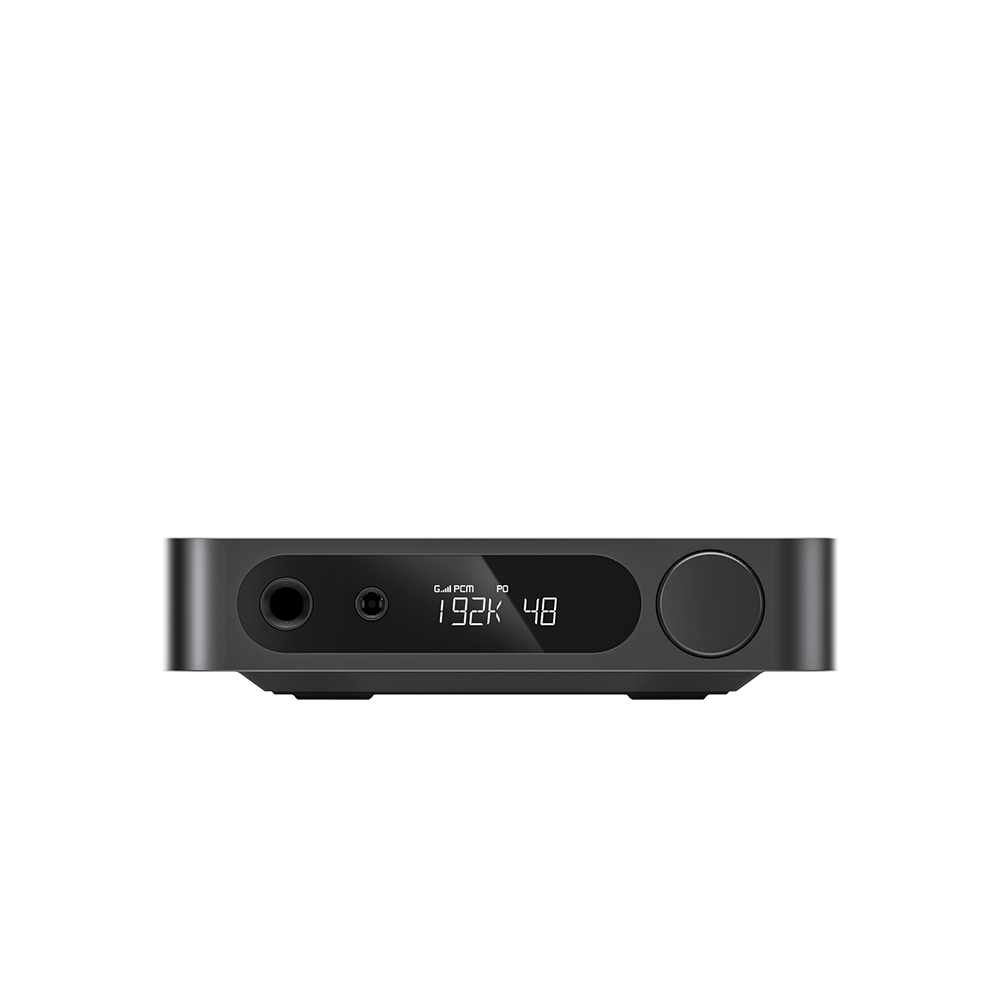
4.Volume adjustment input selection and power on/off composite encoder
5.RGB light
6.Bluetooth antenna
7.RCA input
8.AUX input
9.Trigger input
10.Ground toggle switch
11.Tweeter
12.Woofer
13.Remote receiver window
14.Volume adjustment input selection and power on/off composite encoder
15.RGB light
16.Bluetooth antenna
17.RCA input
18.AUX input
19.Trigger input
20.Ground toggle switch

1.Tweeter
2.Woofer
3.XLR input
4.Audio input
5.Bass gain adjustment
6.Low Bass adjustment
7.Treble gain adjustment
8.Data transmission
9.Power switch
10.AC power input
Power On/Off
When powering on/off, the audio cable and data transmission cable must be connected; both speakers should also be connected to the power cable.
When using XLR input, the audio cable connection is not required.
Power On: After connecting the audio cable and RJ45 data transmission cable, turn on the power switches on the rear panel of both the main and secondary speakers. The speakers will enter standby mode. Press and hold the encoder, and both the main and secondary speakers will power on simultaneously.
Power Off: While powered on, press and hold the encoder. The RGB light will turn off, and both the main and secondary speakers will enter standby mode. Then, turn off the power switches on the rear panel of both speakers to power them off simultaneously.
Input Selection
When powered on for the first time, the default input is Bluetooth.
Short press on the encoder changes the RGB light color once, switching between different input interfaces. The device will remember the last selected input interface upon next startup.
Volume Adjustment
Rotating the encoder clockwise increases the volume, while rotating it counterclockwise decreases the volume.
When the volume reaches 90%, the RGB light flashes red once for each increment. At maximum volume, the RGB light remains steadily lit in red.
EQ Gain Adjustment
The master and slave speakers must be synchronized during gain adjustment to prevent channel imbalance.
Treble Adjustment:
The master and slave speakers are equipped with a three-position toggle switch for treble adjustment: 0 / +2 / -2 dB.
Bass Adjustment:
The master and slave speakers are equipped with a three-position toggle switch for bass adjustment: 0 / +3 / +6 dB.
Low-Frequency Extension Adjustment:
The low-frequency cutoff frequency can be set to either 50 Hz or 60 Hz.
Left/Right Channel Toggle Switch
The channel toggle switch allows the master speaker to be positioned on either side of the desktop space for convenient operation. By default, the switch is set to "R" when the master speaker is placed on the right. When the master speaker needs to be positioned on the left, toggle the switch to "L" to maintain the correct channel orientation.
TRIGGER IN
The TRIGGER IN port connects to preamplifier devices with a TRIGGER OUT interface. When the preamplifier is turned on or off, the SP5 automatically follows the state of the preamplifier.
Smart Standby and Wake Function
Standby Function: Automatically enters standby mode after 20 minutes of no input signal, with the RGB indicator turning red. After an additional 20 minutes in standby, the RGB light turns off completely.
Wake Function: In standby mode, the device automatically wakes up and resumes playback upon detecting an input signal.
Bluetooth Function
Bluetooth Connection
When the speaker is in Bluetooth input mode, the indicator light flashes red and blue alternately, indicating pairing mode.
After successfully connecting to "FIIO SP5" from your device, the RGB light will display corresponding effects based on the connected codec.
Clear Pairing
In Bluetooth mode, double-click the volume knob on the master speaker to clear all paired devices.
Grounding Selection Switch
The grounding selection switch is set to GND by default. If the electromagnetic environment is complex and the preamplifier input uses Class I devices, ground loop interference may occur, resulting in audible noise from the speakers. In such cases, switching it to LIFT can effectively eliminate interference throughout the circuit.
